Build a Repeatable Match Research Routine
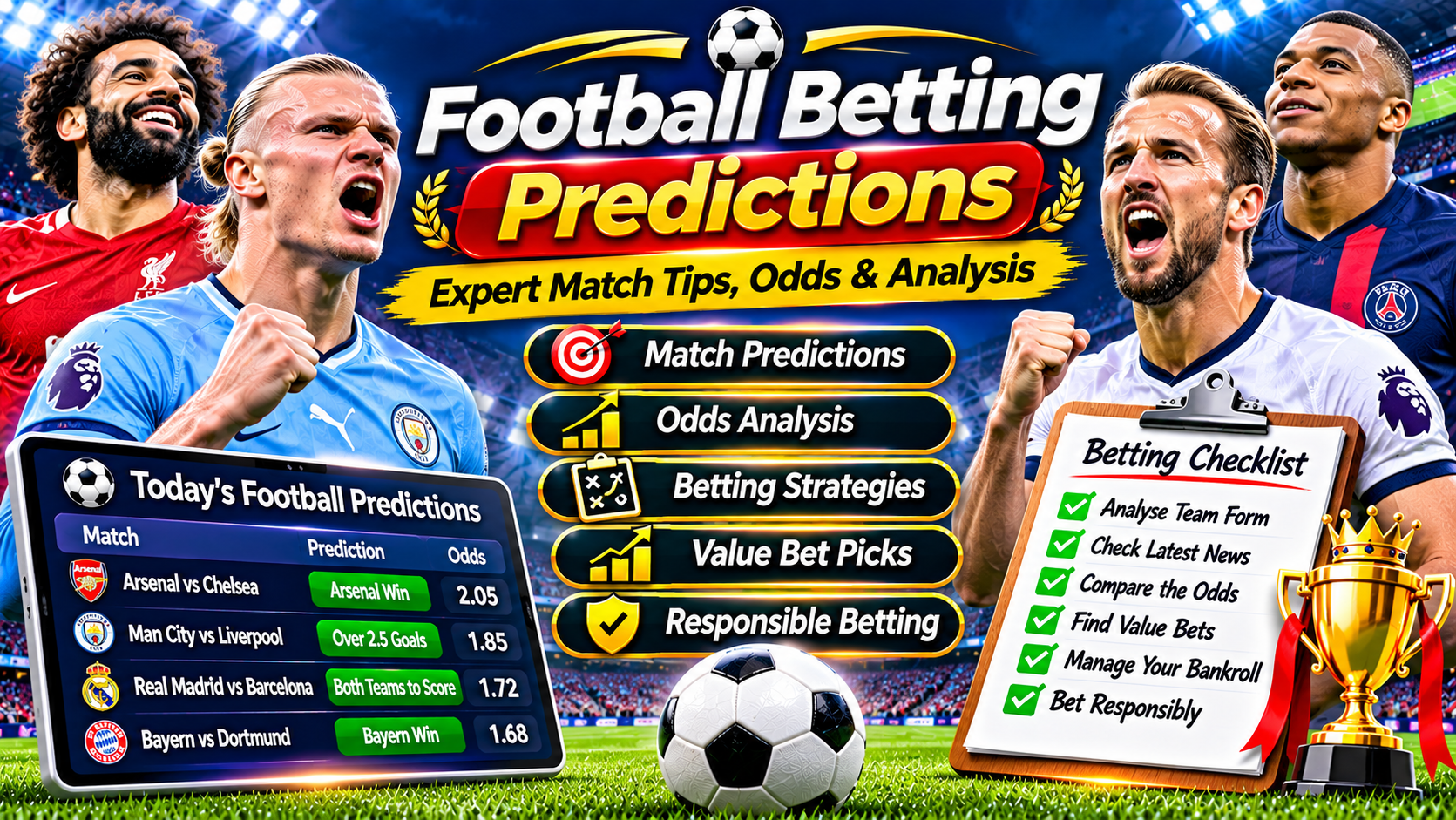
Before you place a bet, collect the same categories of information every time so your decisions stay consistent. Start with team form, but focus on the context behind the results, like opponent strength and whether the squad faced heavy rotation. Then Football Betting Predictions review injuries and suspensions, since even one missing starter can change shape, pressing intensity, and set-piece value. Finally, examine tactical matchups, because certain styles create repeatable advantages that show up in shot quality and chances.
Next, translate research into numbers you can actually use. Look at goal expectancy indicators, shot volume, and defensive actions to gauge whether each team is creating efficiently and defending with discipline. Check home and away splits, but don’t treat them as destiny; travel, weather, and crowd effects can swing performance in ways that are hard to capture in a single statistic. Use lines from reliable odds providers to see how the market prices those signals, and note whether odds imply a different story than your research suggests.
Choose Markets That Fit Your Edge
Not every market is equally suitable for a practical betting approach. If your analysis suggests one team controls territory and shot quality, consider alternatives like over/under goals or both teams to score with a clear rationale. If you expect a tight match, explore markets that reflect that pattern, such as double chance or Asian handicaps, which reduce the impact of variance. For bettors who track discipline and game state, player and team prop markets can also align well with match dynamics, especially when roles are stable.
To make smarter selections, map your edge to the market mechanics. For example, if you expect a team to score first, markets tied to first half outcomes or team to score can reflect that advantage, but you should validate it with early-game patterns like pressing success and midfield turnovers. If your edge is defensive solidity, look for bets that reward low-risk outcomes, including under lines and clean sheet scenarios where supported by injury and lineup information. Always compare implied probabilities from the current odds, because the “best pick” on paper can become a poor value bet if the price is too short.
Use bankroll logic to decide whether to bet more aggressively or stay conservative. A practical guide means setting stake sizes based on confidence tiers derived from your research, not from emotion. Keep a simple structure: lower stakes for exploratory bets, moderate stakes for aligned data, and higher stakes only when multiple independent indicators point the same way. If you’re unsure, pass rather than forcing a selection, because missing a bet is often better than paying for uncertainty.
Interpret Odds, Value, and Line Movement
Odds tell you how the market interprets risk, and your goal is to identify when that interpretation is off. Convert decimal odds to implied probability to see whether a selection is priced fairly relative to your own assessment. If your estimated probability is higher than the implied probability, you may have value; if it’s lower, the bet is likely overpriced. Don’t rely on odds alone—use them as a reality check against your research and tactical expectations.
Pay attention to line movement, especially when it contradicts public narratives. If major money moves the total goal line downward, it can signal sharper expectations about pace, finishing, or defensive matchups. If a handicap shifts toward one side despite uncertainty about availability, it may reflect updated team news or an early consensus that the market is adjusting to. Track how quickly markets move after confirmed lineups, because post-team-news pricing often reveals who had the information edge.
When building a parlay, avoid stacking correlated outcomes that all rely on the same game script. For instance, pairing a “team to score” with “over” can be redundant if your thesis is simply that one side controls chance creation. Instead, combine legs that reflect different aspects of your analysis, such as a defensive solidity angle with a separate market that captures end-to-end tempo. If you prefer single bets, concentrate on cleaner edges and keep variance controlled with disciplined stakes.
Casino and Bonus Strategy for Responsible Gambling
Sports betting is only half the decision-making process, and casino play should follow the same practical rules. Choose casinos with transparent rules, clear wagering requirements, and straightforward withdrawal policies so you can evaluate risk before depositing. Review bonus terms carefully, including contribution limits, time windows, and whether certain games are excluded. A practical bettor treats bonus offers as an investment with conditions, not as free money, and calculates whether the expected return matches the effort required.
For slot play, focus on game selection and bankroll fit rather than chasing volatile jackpots. Look for adjustable bet sizes and understand how volatility affects long-run results, because high volatility can create long streaks that feel like “almost wins” while the bankroll steadily declines. Use a session plan that sets a maximum loss and a stopping rule, then step away when you hit it. This approach protects your bankroll so you can keep betting responsibly, instead of recovering losses by increasing risk.
If you use promotions, consider aligning them with your natural playing style. Some bonuses are better suited to steady wagering patterns, while others favor higher turnover; neither is automatically superior without matching your plan. Keep records of which promotions you accept and how you performed, since this improves your decision quality over time. Responsible gambling also includes recognizing chasing behavior, setting limits in advance, and seeking help when betting starts to disrupt daily life.
Conclusion
When you understand the mechanics behind each market, you can choose bets that match your edge instead of forcing picks into a system that doesn’t fit. This reduces impulsive decisions and improves long-term decision quality, even through losing streaks. Use disciplined bankroll management across both sports and casino play, and treat bonuses as structured agreements with clear costs and benefits. When you set stake tiers, avoid correlated parlay legs, and choose games that align with your risk comfort, your betting becomes more controlled and sustainable. A smart routine won’t eliminate variance, but it can help you bet with confidence, clarity, and responsibility.
1 comment
I appreciate the practical approach here. For Football Betting Predictions, I like to start with a quick checklist: confirm team news (injuries/suspensions), compare recent form alongside opponent strength, and review market movement to spot value. If odds are thin, I avoid forcing bets and wait for better pricing. On the